Dental implants in Richmond
Replacing a missing tooth doesn't just restore your smile - it restores how you eat, speak and feel about yourself. Our experienced team is here to look after every step of the journey.
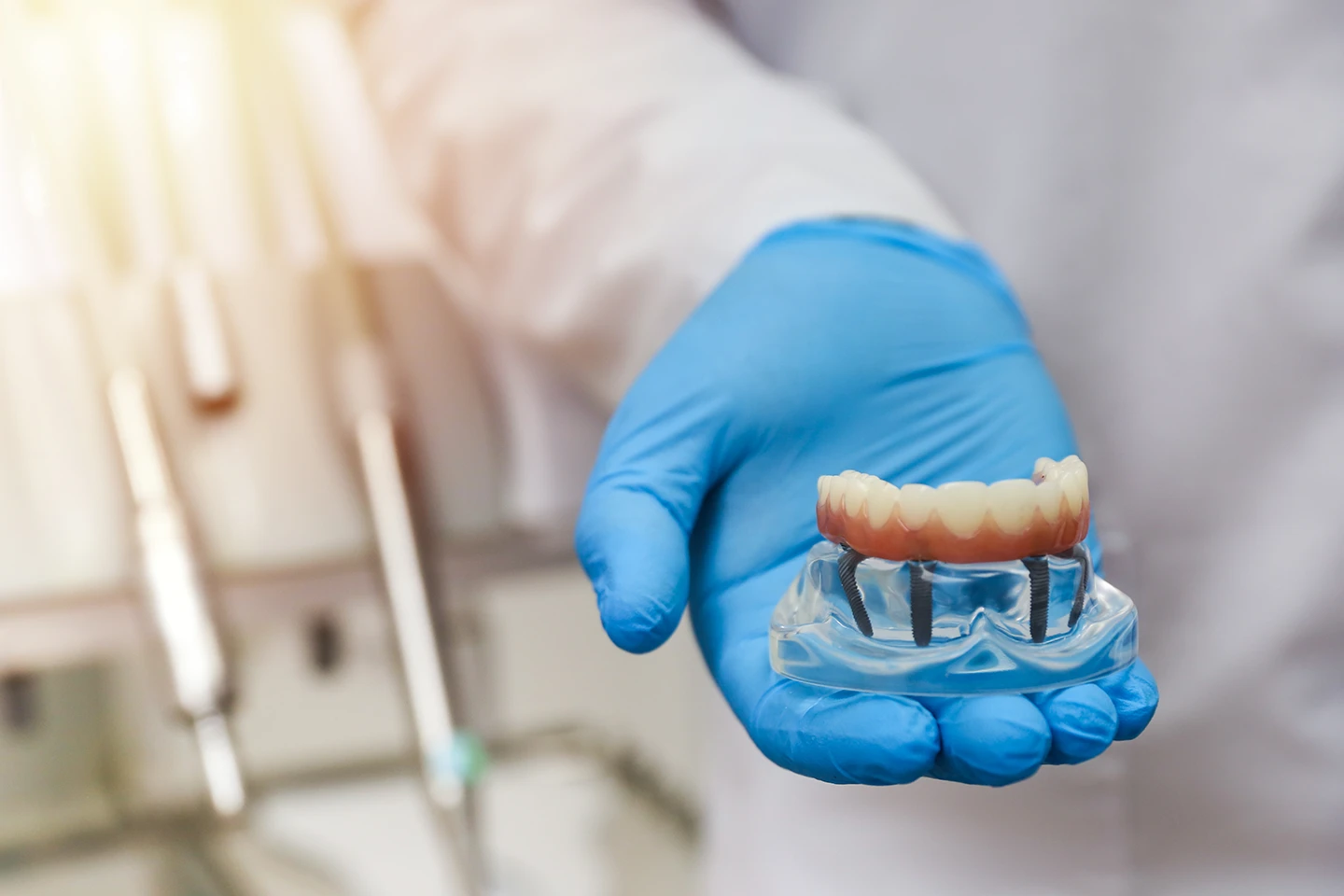

What are dental implants?
A dental implant is a small titanium post that's gently placed into your jawbone to act as a replacement tooth root. Once it has healed, a beautifully crafted crown, bridge or denture is fixed on top - giving you a tooth that looks, feels and works like your own.
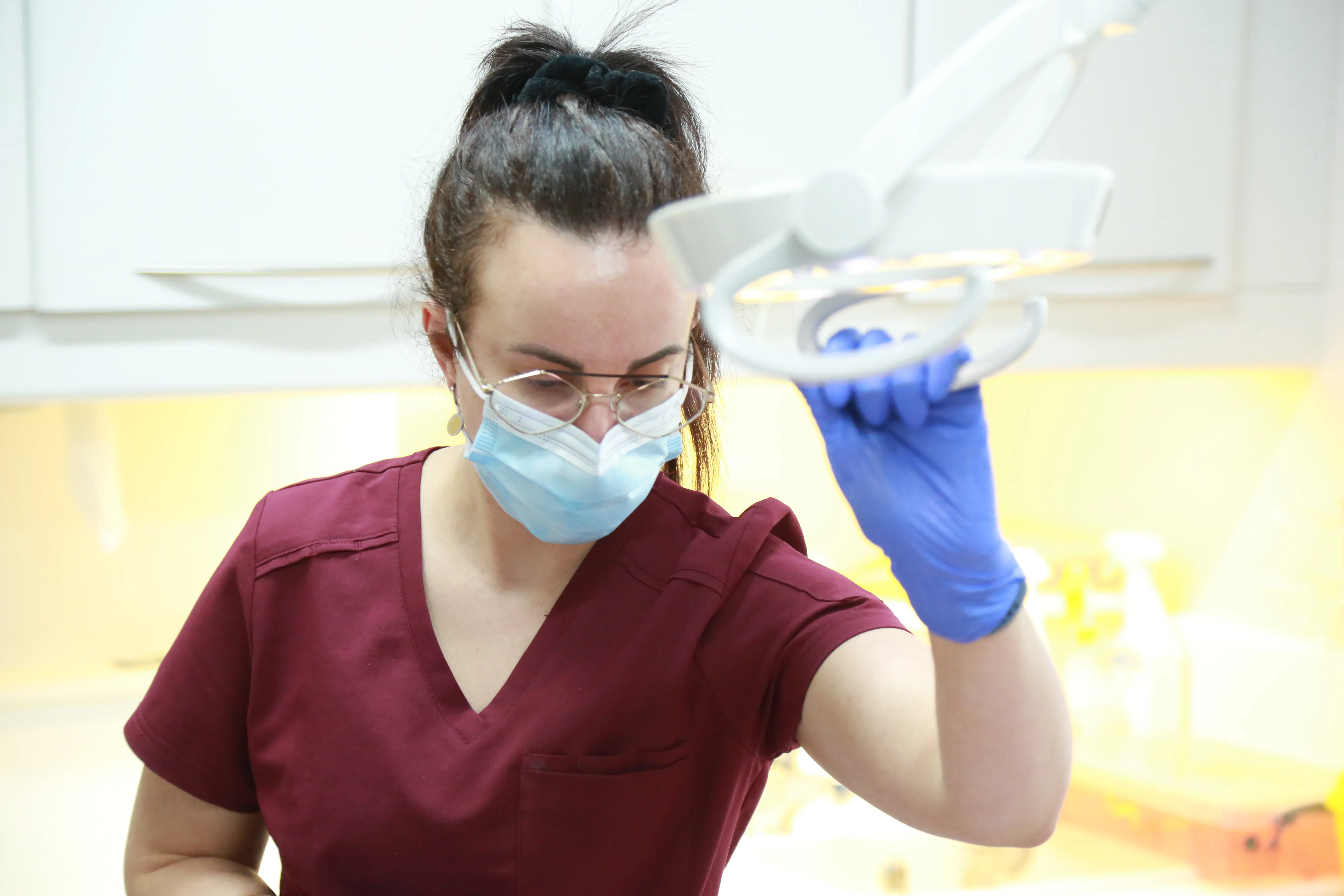
Why a missing tooth matters more than you might think
A gap in your smile isn't only a cosmetic issue. Over time, neighbouring teeth begin to drift, the bone in your jaw slowly shrinks, and your bite can change in ways that affect how you chew and speak. Replacing a missing tooth - properly and promptly - protects everything that's still there.

Complete implant dentistry in Richmond, from bone grafting to same day teeth
We're set up to handle the full range of implant cases in-house, including straightforward single implants, multiple implants, full-arch reconstruction with same day teeth, bone grafting, sinus lifts and complex referral cases. Many practices refer this work elsewhere - we're proud to look after our patients ourselves, from start to finish.

Modern dentistry in Richmond powered by 3D scanning
Every implant case begins with a 3D CBCT scan, which gives us an extraordinarily detailed view of your jawbone, nerves and sinuses before we plan a thing. We use Dentsply Sirona implant systems - one of the most established and trusted in the world - and digital iTero scanning instead of messy traditional impressions.
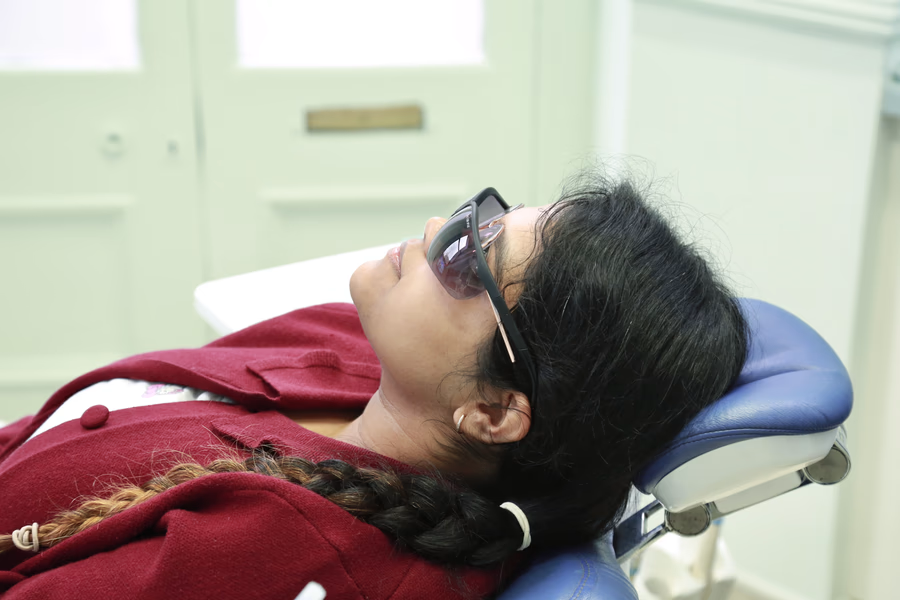
How do dental implants work?
Implants work because of a remarkable natural process called osseointegration, where the surrounding bone fuses directly to the titanium post over several months. Once that bond has formed, the implant becomes a permanent, stable foundation for your new tooth.
Who is suitable for dental implants?
Most adults with a missing tooth (or several) are suitable candidates. The factors we'll assess at your consultation include:
- Overall gum health
- The amount and quality of jawbone
- General medical history
- Any habits like smoking, which can affect healing
- Whether bone grafting may be needed beforehand
Your dental implant journey at Richmond Hill Dental
Implant treatment is a considered process, and we'll guide you carefully through every step. Here's exactly what to expect.
Step 1 - Your initial consultation
You'll have a dedicated consultation with our implant team for £95, where we'll examine the area, talk through your goals, and explain whether implants are right for you.
Step 2 - 3D CBCT scan and detailed planning
If you're a good candidate, we'll take a 3D scan of your jaw to plan the precise position, depth and angle of your implant. You'll receive a clear written treatment plan with all costs.
Step 3 - Implant placement
The implant is gently placed under local anaesthetic (or IV sedation if you'd prefer). The procedure itself is usually quicker and calmer than patients expect, and most return to work the next day.
Step 4 - Healing and integration
Over the following three to six months, the implant integrates with your jawbone. During this time, you'll often have a temporary tooth in place, and we'll review you regularly to check everything's healing well.
Step 5 - Your final crown, bridge or denture
Once the implant is fully integrated, your final restoration is digitally designed and beautifully crafted to match your natural teeth. We'll fit it carefully and check every detail before you leave.
Step 6 - Long-term aftercare
With good home care and regular hygiene visits, dental implants can last for decades. We'll see you regularly to keep everything in excellent health.
What if I don't have enough bone for an implant?
This is more common than people realise, especially if a tooth has been missing for some time. We offer the full range of bone-building procedures in-house - including bone grafting, sinus augmentation and ridge preservation - so you don't need to be referred elsewhere.
Sedation for nervous patients in Twickenham and Richmond
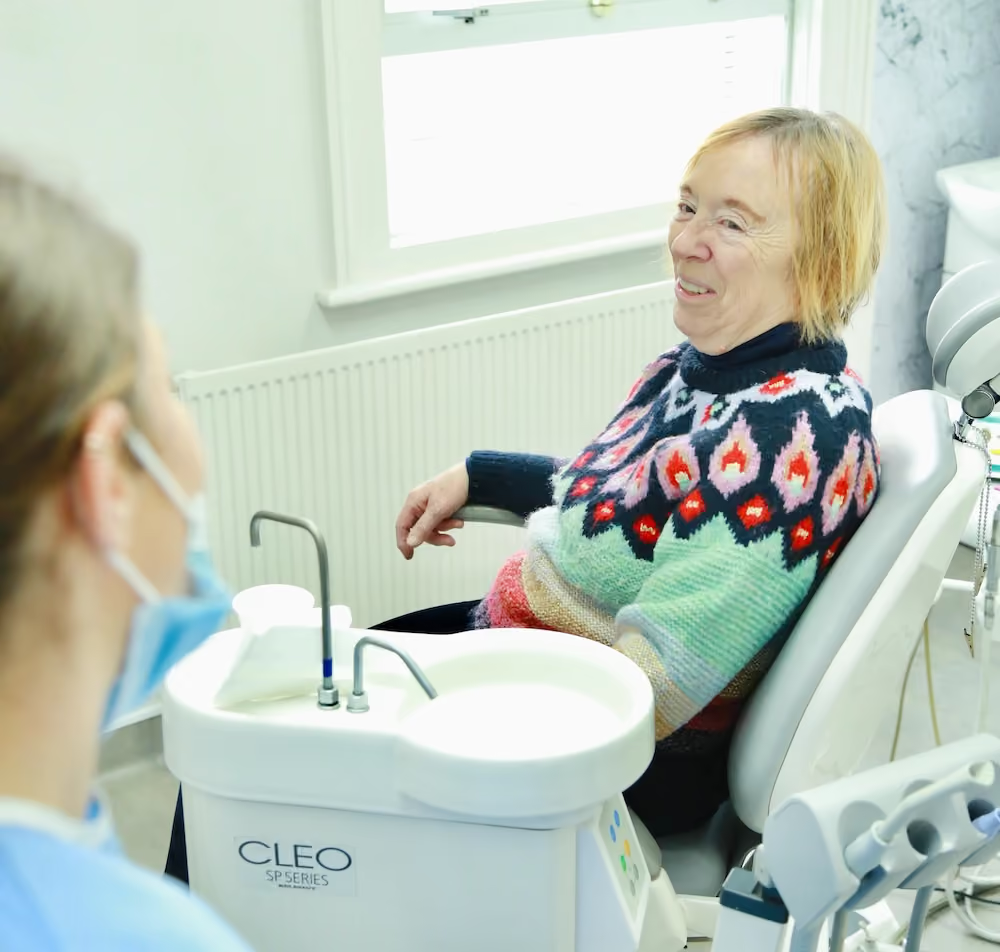
If you're anxious about implant treatment, please know you're far from alone. IV sedation with Dr Frances Carling-Thom can help you feel deeply relaxed throughout, with most patients remembering very little of the appointment afterwards.

How much do dental implants cost in Richmond?
We're a fully private practice with transparent, upfront pricing across every stage:
- Implant consultation - £95
- Implant second opinion - £155
- 3D CBCT diagnostic scan - £125
- Atraumatic tooth extraction for implant - from £295
- Ridge preservation - from £495
- Dental implant - from £1,500
- Abutment and crown - from £1,500
- Bone graft - from £1,200
- Sinus augmentation - from £600
- All on 4 / Same day teeth - from £9,000
Frequently asked questions
How long does implant treatment take from start to finish?
Most cases take between three and six months from implant placement to final crown, which allows the bone to fully integrate with the implant. Cases needing bone grafting may take a little longer. For suitable patients, same day teeth can be an option.
Will the implant procedure be uncomfortable?
The area is fully numbed before we begin, and most patients say it felt far gentler than they expected - often easier than a complex extraction. Any tenderness afterwards is usually mild and settles within a few days.
How long do dental implants last?
With good home care and regular hygiene visits, dental implants regularly last for decades. Many of our long-term patients still have implants placed 20 to 25 years ago, and the technology has only improved since.
Are dental implants safe?
Yes. Dental implants are one of the most well-researched treatments in modern dentistry, with excellent long-term success rates. Our 3D CBCT planning and use of established Dentsply Sirona systems gives us the highest possible margin of safety.
Can I have an implant if I smoke?
You can, but smoking does affect healing and long-term success rates. We'll talk this through honestly at your consultation and help you understand what you can do to give your implant the best chance.
What's the difference between an implant and a bridge?
A bridge replaces a missing tooth by anchoring to the teeth either side, which usually means reshaping those teeth. An implant replaces the tooth on its own, without affecting neighbouring teeth - which is why most patients now choose implants where they're suitable.